In design
Someone to talk to between sessions, right on the living-room TV.
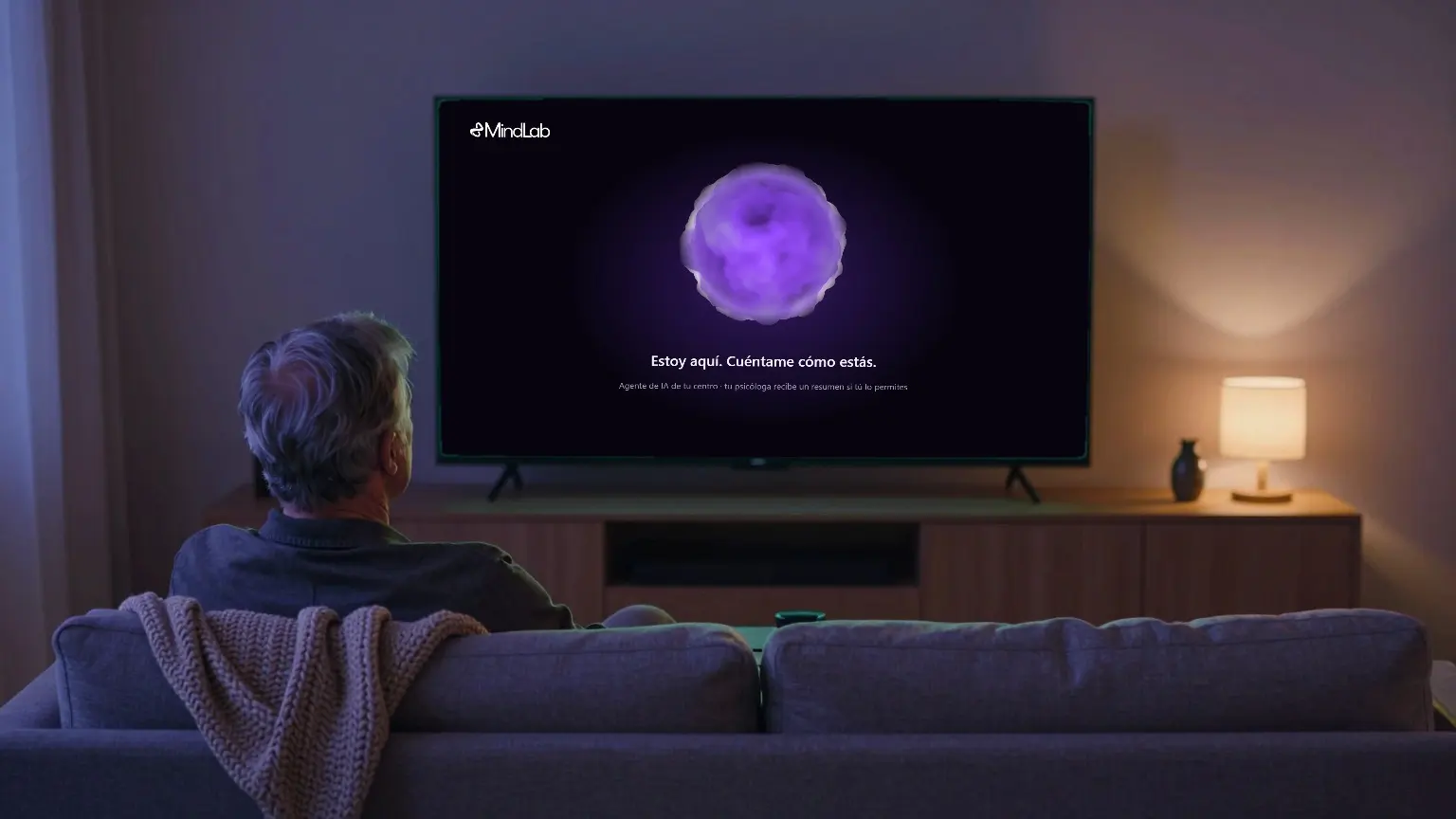
MindLab Companion is an avatar agent that appears on the patient's TV for a live, face-to-face conversation: to unload the day, practise what was agreed in therapy and arrive at the next session with a summary they chose to share. It accompanies the work of the psychologist; it does not replace it.
Why
The week happens between appointments
Too long to carry alone
A therapy session is one hour a week. The anxiety, the arguments and the good days happen in the other 167.
Memory fades
By the time of the session, much of what happened is blurred. A summary helps start from what actually mattered.
The TV is already there
No new device, no app to learn: the screen in the living room becomes a calm, face-to-face place to talk out loud.
For the patient
What the companion does at home
Live conversation, face to face
A photorealistic avatar that listens and answers by voice in real time, without hurry and without judging.
Unload the day
A spoken diary: what happened, how they felt and what they want to bring to the next session.
Practise what was agreed
Breathing, grounding or exposure exercises chosen by the psychologist, guided step by step on the screen.
Gentle reminders
Tasks agreed in therapy, the next appointment and self-care habits, at the times the patient picks.
For the psychologist
What reaches the professional, and only with consent
A summary before the session
Topics that came up, mood the patient reported and progress on the agreed tasks, ready before the appointment.
Patterns over time
How sleep, mood or anxiety the patient reported change across weeks, to talk about in session.
Signals the patient agreed to share
Changes in routine or behaviour that the patient and the professional decided, together, should be flagged.
The patient sees it first
Every summary is shown to the patient before it is sent, and they can edit it or decide not to share it.
How it would work
From the consulting room to the living room
The professional invites
The psychologist proposes the companion, agrees the goals with the patient and decides together what will be shared.
The patient pairs the TV
A code on the screen links the TV app to their account; the patient signs the consent and can revoke it at any time.
Conversations at home
The patient talks with the companion whenever they want, for as long as they want.
Summary before the session
The patient reviews the summary and, if they approve it, it reaches the professional before the appointment.
Humans in a crisis
If the conversation shows risk, the companion shows emergency lines and follows the escalation protocol set by the clinic.
Who it is for
Where we see it helping first
Between therapy sessions
Patients in psychological treatment who benefit from talking out loud and keeping track of their week.
Older adults living alone
Daily company and conversation, with reminders and a caregiver or relative informed of what was agreed.
Recovery at home
After a hospital stay, support with routines and a channel to tell the team how recovery is going.
Chronic conditions
Habits and treatments that need a little encouragement every day, with progress the care team can see.
Design principles
What we will not compromise
It does not replace therapy
The companion supports a treatment led by a professional; it does not diagnose, treat or make clinical decisions.
Consent, explicit and revocable
Nothing is shared without the patient's permission, and they can stop sharing or delete their history whenever they want.
A human protocol for risk
Risk situations are escalated to people, following a protocol defined with each clinic, never resolved by the agent alone.
Private by design
Minimum data, encryption and access only for the professionals the patient chose. Conversations are not used to train general models.
Validated with clinicians
Content, exercises and alerts are reviewed by mental health professionals before they reach a patient.
Transparent about what it is
The patient always knows they are talking to a virtual agent created by MindLab.
FAQ
Frequently asked questions
Does MindLab Companion replace the psychologist?
No. It is designed to accompany a treatment led by a professional, between sessions. It does not diagnose, treat or make clinical decisions.
Is it available today?
Not yet. It is in design, and we are building it with psychologists and clinics in a co-design pilot before any launch.
What does the professional see?
Only what the patient agreed to share: a summary of topics, the mood they reported and progress on agreed tasks. The patient reviews each summary before it is sent.
What happens if the patient is in crisis?
The companion shows emergency lines and follows the escalation protocol defined with the clinic, so that a person takes over. The agent never handles a crisis alone.
Which TVs will it work on?
We are defining the first platforms (smart TVs and TV boxes) with the pilot partners, so that it works on the screen the patient already has.
Next step
Are you a psychologist, a clinic or a care provider?
We are looking for professionals to design MindLab Companion with us: define what is useful, what must never happen and how it should be measured. Write to us and we will tell you about the pilot.